Sierra Comfort SC-901 All-Inclusive Portable Massage Table
The Sierra Comfort all-inclusive portable massage bundle, which offers a complete massage solution to get you started right away. The package starts with a portable massage table made of high-quality beach timber, with a luxurious 2.5-inch high-density foam deck to keep the client comfortable. The table also includes such features as a removable facial cradle, arm supports, and an armrest, along with coated tension wires along the leg supports for strength and durability. To protect the table, Sierra Comfort added a full set of fitted sheets made of 100-percent cotton. And users will love the bundle's variety of massage accessories, which include a semi-circle bolster, an oil pouch, a towel hanger, and a durable carrying bag. Other features include a water and oil-resistant surface on the deck, an adjustable height between 23 and 33 inches, premium carry handles, and durable stitching. The Sierra Comfort massage table measures 72 by 23-33 by 28 inches (W x H x D).
Assembled
View larger
All-inclusive Package
View larger
Close Up
View larger
Easy Storage
View larger
Closed view with carry handles
View larger
Carry Bag
View larger
Sierra Comfort SC-901 All-Inclusive Portable Massage Table
Features and Specifications
Carry Bag with Shoulder StrapWaterproof and Oil Resistant DeckBeach Maple Hardwood ConstructionLightweight Adjustable Face CradleForward Swinging Arm Cradle2.5-inch High Density Foam DeckPremium Carry Handles Durable StitchingOpen: 72-inch Long x 28-inch WideLength (w / Face Cradle) 82-inchHeight (adjustable): 23 to 33-inchClosed: 38" Long x 28" Wide x 7" ThickNo Tools Needed for Set-Up36 lb. Base Table Weight (39 lb. with Accessories)Fitted Sheet Set (Table, Face Cradle, Arm Supports)Semi-Circle BolsterTowel Hanger and Oil Pouch2.5-inch High Density Foam PaddingRemovable / Adjustable Face CradleBuilt-in Face PortalTable Widening Arm Supports

Discover new perspective to online shopping.
Wednesday, 28 September 2016
Sierra Comfort All Inclusive Portable Massage Table

Hoover T-Series WindTunnel Pet Bagged Upright, UH30310
WindTunnel technology removes embedded dirt and minimizes blowblack and scatter on carpet activated carbon Hepa media bag that filters and traps 99.97% of dust and pollens (down to 0.3 microns). It absorbs household odors in clean-drop bags with 1-touch releases the full bag directly into the trash, so users never have to touch the bag. Intuitive power controls on/off brushrool easy belt change system and brushroll access.
Tuesday, 27 September 2016
Which Clever Kitchen Gadget Are You?
Originally From: https://www.buzzfeed.com/sarahaspler/which-funky-kitchen-gadget-are-you?utm_term=4ldqpia
Let’s just hope you don’t get something counter-intuitive.
Want even more great product suggestions? Sign up for BuzzFeed’s Gift Guide Newsletter!
Two Unicorns Go To War In Business Software
Originally From: https://www.buzzfeed.com/williamalden/two-unicorns-go-to-war?utm_term=4ldqpia

Hulton Archive / Getty Images
Josh Reeves, the 33-year-old CEO of the payroll and benefits startup Gusto, is an Eagle Scout with a sweet smile and a sensible haircut. He speaks softly, blushes easily, and gently reminds guests to remove their shoes before entering the office.
But last week, at a press briefing in a private dining room of an upscale San Francisco lunch spot, Reeves slung mud at Zenefits, his most prominent — and most prominently troubled — rival. He had just been telling the reporters about Gusto's new product, a Zenefits-like human resources software system. With Zenefits expected to unveil its own product upgrade next month — dubbed Z2 — Reeves seemed keen to ensure his rival's past missteps wouldn't be forgotten.
"Z2 sounds like a sequel," Reeves said. "Ideally the first movie is good enough on its own."
"There are no shortcuts. There's always a poster child for that," he added, in a not-so-subtle dig at Zenefits' past failures to comply with insurance broker licensing rules. "Things like compliance have to be there from the beginning."
"We've been thrilled by the customers moving to us from Zenefits," Reeves continued. The burger he had ordered remained untouched.
The beef between Gusto and Zenefits — which fired its founding CEO and lost hundreds of employees earlier this year in the wake of its broker licensing scandal — stretches back about a year. That's when BuzzFeed News reported that Zenefits, known for making human resources software and selling health insurance, was secretly developing a payroll processing system, stepping directly onto the turf of its onetime partner Gusto, then known as Zenpayroll.
Zenefits' effort had the tongue-in-cheek nickname "Project Nutshot."
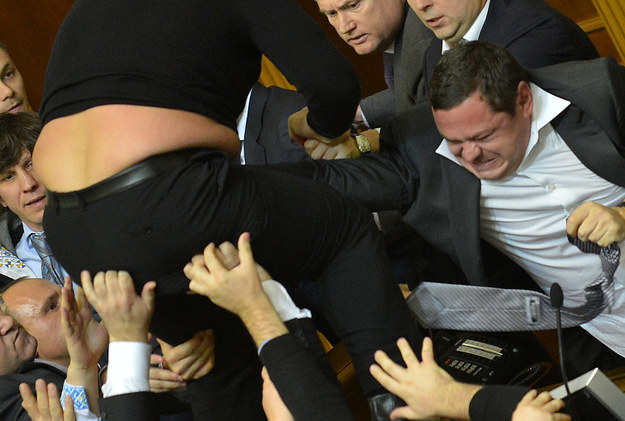
Sergei Supinsky / AFP / Getty Images
Gusto — which at that time was itself quietly moving onto Zenefits' turf by preparing to sell health insurance — has now fired back in force. On Tuesday it announced it has created an "all-in-one" human resources software system, including features to help small companies onboard new employees and manage 401(k)s. The effort is a direct challenge to Zenefits, which has long offered similar features but has lately been busy patching things up with regulators and customers.
Told of Reeves's comments, Zenefits spokesperson Jessica Hoffman picked up the gauntlet.
"It's great to hear that our competitors are already in a panic about Z2," Hoffman said in an email to BuzzFeed News. "They're still trying to copy version one of our product while we are about to launch version two, which will redefine this industry."
"The fact that they're talking so much about Zenefits indicates who the market leader is," Hoffman added.
Silicon Valley startups aren't often willing to spar like this in public (they're usually more comfortable criticizing giant incumbents in their industry, as Zenefits did last year in a legal fight with ADP). That Gusto and Zenefits would publicly trade blows underscores their yearning to capture potential riches in the business of HR and payroll management. Both startups are trying to bring technology to an antiquated, paperwork-heavy industry that can cause real headaches for small businesses. Zenefits moved early in offering a software-powered HR system, but it moved too quickly, and now Gusto is trying to seize an advantage.
At the media briefing last week — held at celebrity chef Tyler Florence's Wayfare Tavern, where spiced deviled eggs seem as plentiful as tap water — Gusto staff handed out embargoed press releases with details on the startup's progress and plans. Over 40,000 small businesses use Gusto's payroll software, according to the release and an email from a spokesperson. (Zenefits, by comparison, says it has more than 20,000 customers using its HR software.) The new Gusto HR product will include a "welcome wall" where coworkers can warmly greet a new employee, according to the release. An executive at a healthcare company was quoted saying he was "confident that everything is done right with Gusto."
Many details seemed intended to highlight how Gusto was different than Zenefits, though the release never mentioned its rival by name. Reeves, however, was less coy. After introducing the subject of Zenefits by saying he wanted to discuss the "ecosystem," Reeves said he had heard "horror stories" from companies that had used Zenefits and switched to Gusto.
Borrowing a line that Zenefits once used, Reeves said he was "excited to be the fastest-growing company in this space, as far as I can tell," by number of customers. (Still, Gusto has been in payroll processing for most its existence, while Zenefits has been in the slightly different business of insurance and HR management.)
Reeves also said he was "excited to be doubling our valuation in our last financing round, while others are halving their valuation."
Gusto, which launched in 2012, was valued by investors at $1 billion in a financing round in December, doubling its valuation in under a year. Zenefits, launched in 2013, agreed in June to cut its valuation in half — to $2 billion from $4.5 billion — in a deal with its investors.
Zenefits' new CEO, David Sacks, has undertaken a sweeping effort to remake the company, including by taking a contrite tone and forging a string of settlements with state regulators. In May Sacks announced he had changed the company's stated values: “Everyone’s shit stinks,” for example, became “Put the customer first.”
Reeves, as his burger got cold, had something to say about company values, too.
"You don't really change them," he said. "You have to know them from the beginning."
Sacks, as it happens, invested in Gusto in its seed round several years ago. Reeves said at the briefing that Sacks — an experienced entrepreneur who sold his software startup Yammer to Microsoft for just over $1 billion — currently has no access to Gusto's confidential information. The two spoke in 2012, when Reeves got advice from Sacks on building a business, and haven't spoken since, Reeves said.
How Well Do You Remember "The Hitchhiker's Guide To The Galaxy"?
Originally From: https://www.buzzfeed.com/tomchivers/i-am-now-a-perfectly-safe-penguin?utm_term=4ldqpia
Douglas Adams, how we miss you.
31 Insanely Delicious Candies That You'll Wish You Knew About Sooner
Originally From: https://www.buzzfeed.com/maitlandquitmeyer/candy-youll-wish-you-knew-about-sooner?utm_term=4ldqpia
::tries to eat screen::

We hope you love the products we recommend! Just so you know, BuzzFeed may collect a small share of sales from the links on this page.
Jenny Chang / BuzzFeed
Kinder Bueno Milk Chocolates, which have a crispy cookie shell and a Nutella-like cream filling.
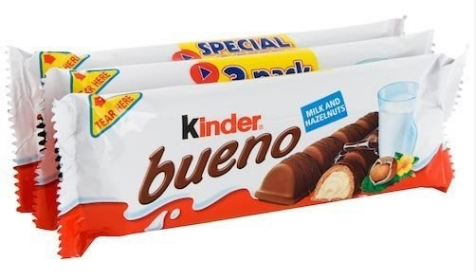
Get a pack of three from Amazon for $4.08.
Viva Labs Organic Chia Seeds: Raw and Non-GMO
Viva Labs The Finest Organic Raw Chia Seeds 1 Pound New
BRAND NEW
Officially Licensed
Monday, 26 September 2016
We Could Be Getting A Will & Grace Reboot
Originally From: http://www.refinery29.com/2016/09/124394/will-and-grace-reboot?utm_source=feed&utm_medium=rss

Update: 8:15 p.m.: The Will & Grace cast was filming not a reboot but a video about the election just in time for the first presidential debate.
In the skit, Debra Messing and Eric McCormack defend Clinton while Megan Mullally plays an overzealous Trump fanatic and Sean Hayes sits on the fence as an "unemployed, uneducated angry white man," Entertainment Weekly reported. As usual, hilarity ensues.
This story was originally posted on September 27 at 9:00 a.m. EDT.
Former Will & Grace cast members have been posting photos of themselves on what looks like the set of the hit series, which ran from 1998 until 2006.
They met up Saturday at a comedy show hosted by former cast member Megan Mullally and her husband Nick Offerman, as Us Weekly reports. Then, they flooded us with excited social media posts.
"I feel like something BIG is going to happen tomorrow," wrote Debra Messing on Sunday.
I feel like something BIG is going to happen tomorrow. pic.twitter.com/oIy0nCxirb
— Debra Messing (@DebraMessing) September 26, 2016
"I used to be able to do this without glasses," Eric McCormack captioned a photo of himself with a script.
I used to be able to do this without glasses... pic.twitter.com/l9ctYCZqH6
— Eric McCormack (@EricMcCormack) September 26, 2016
Mullally shared a shot of herself in the apartment where the show takes place. "I remember this place," she wrote, suggesting that it really could be apartment 9C.
I remember this place. pic.twitter.com/Elwgvx7Sof
— Megan Mullally (@MeganOMullally) September 26, 2016
Sean Hayes also looks like he was on set.
Beverly Leslie comes up to here on me. pic.twitter.com/CQRfoKRvJN
— Sean Hayes (@SeanHayes) September 26, 2016
Ten years after it ended, could the show be taking after Gilmore Girls and giving us a reboot? If Messing's tweet is to be believed, we'll find out today.
Like what you see? How about some more R29 goodness, right here?
The Awkward Way Blac Chyna's Mom Learned She Was A Stripper
American Horror Story-Themed Costumes For Every Occasion
Is Stranger Things Really About Eleven Getting Her Period?
Can personal trainers and health coaches give nutrition advice? Yes, they can — with proper training and some important caveats.
Originally From: http://www.precisionnutrition.com/can-personal-trainers-give-nutrition-advice
It’s a hot debate: Can personal trainers, health coaches, and other non-RD professionals give nutrition advice to their clients? You’ll be surprised (and relieved) to hear: Yes, to a degree. Here’s exactly what you’re allowed to say, and why it’s important to say it.
++++
Fitness is a competitive industry. It can also be confusing at times.
You might find yourself asking:
What credentials do I need to boost my education, help my clients, and have a successful, fulfilling career?
How can I stand out?
One great way is to learn more about nutrition so you can confidently help clients improve this important area of their lives.
“But wait!” you say.
“Am I even allowed to give nutrition advice?”
I’ve been asked this question literally thousands of times.
Health and fitness pros desperately want to help clients eat, move, and live better. And they want to know if it’s okay to talk about nutrition with clients.
They know that without proper nutrition, clients will struggle with weight, body composition, metabolism, and many of their health goals.
But people worry.
Some have been told they’re not qualified to talk about food with their clients — that it might even be illegal.
Here’s the truth:
Personal trainers/health coaches CAN talk to clients about what they eat.
And they’re allowed to make general suggestions about the kind of food that’s likely to support their clients’ goals.
But there are limits to what personal trainers, health coaches, and other non-Registered Dietician (RD) professionals can say about nutrition.
Perhaps even more importantly:
If you’re going to talk about nutrition, you really need to know what you’re talking about.
So let’s clear up the confusion.
In this article, I’m going to explain:
- What personal trainers, health coaches, and other non-RD fit pros can’t do when it comes to nutrition.
- What personal trainers, health coaches, and other non-RD fit pros can do when it comes to nutrition.
- Why it’s important to talk about nutrition in the first place.
First, a history lesson.
Before we get into the details, I want to tell you a story about a good friend of mine, Gray Cook, who created the Functional Movement Screen (FMS).
About 15 years ago, Gray was one of the first people to bring movement screening, corrective exercise, and dynamic mobility work into fitness.
At that time, movement screening and dynamic mobility exercises were considered the realm of physical therapy only — and therefore outside the personal trainer’s scope of practice.
Then Gray started teaching these techniques to personal trainers.
Managers at gyms got angry. Trainers got nervous. Physical therapy organizations sent him cease-and-desist letters and lawsuit threats.
It all went by the wayside because, fundamentally, these practices are all about movement — and movement belongs in the gym.
Education won over fear and feudalism. Today fitness professionals routinely include movement screening, mobility work, and corrective exercises as part of their workouts with clients.
We’re on much the same path with personal trainers, strength coaches, and nutrition support.
Some good news: The fitness industry has begun treating clients as “whole people”.
The most educated and experienced coaches — the leaders — recognize that they can’t achieve the best results unless they coach the “whole person”.
Unless they deal with the stress someone is under, the sleep problems they’re having, and the common ways in which their diets are working against them, their gym prescriptions will be far less effective.
Clients are also starting to expect nutrition advice as part of the package.
So the best professionals are now wading into the nutrition waters.
Yet if you’re feeling unsure about what you can (and can’t) say about food, you’re not alone. Lots of people feel this way.
And I think that’s a good thing.
It means you care about your career, you care about your clients, and you want to make sure you’re doing a good job — while doing the right thing.
My message for you:
You can (and should) talk about nutrition with clients — as long as you respect these guidelines and know one important thing…
What personal trainers, health coaches, and other non-RD fit pros CAN’T do when it comes to nutrition.
Let’s clear up what you are not allowed to say without having the RD credential.
Registered dietitians complete a four-year degree program and log hundreds of hours in a rigorous internship. They study physiology, anatomy, biochemistry, microbiology, and many other areas of science as part of their coursework, and typically train in a special area, like pediatric or geriatric nutrition.
Earning their degree, and passing a licensure exam, qualifies RDs to offer medical nutritional therapy (MNT) — treating medical conditions (such as diabetes) through a tailored diet and close monitoring.
Often, registered dietitians spend their careers working with patients in hospitals or other clinical settings.
Therefore, if you’re not a registered dietitian or doctor, you CANNOT legally:
- prescribe diets or supplements to treat medical and clinical conditions;
- prescribe diets to treat symptoms of medical and clinical conditions; nor
- diagnose medical conditions.
So if you’re a personal trainer, health coach, or strength coach and a client comes asking what diet to follow to treat their diabetes — that’s outside your scope of practice. It’s MNT and therefore illegal unless you’re a RD.
Another scenario: Let’s say you’re a fitness professional and you have an obese client. You’re not allowed to “prescribe a diet” to “treat” their obesity. That’s MNT and reserved for licensed dietitians or medical professionals.
In the end, it’s best (unless you’re a RD) to avoid “treating”, “prescribing”, and “diagnosing”. (Note: In some states, giving someone a meal plan is considered “prescribing”; Precision Nutrition-style “habit-based” approaches are not).
What personal trainers, health coaches, and other non-RD fit pros CAN do when it comes to nutrition.
Each state or province has different rules and regulations regarding what you can call yourself, what kind of advice you can give, etc.
However, generally, as a personal trainer, health coach, or strength coach, if you’re knowledgeable about nutrition then you can talk to otherwise healthy clients about eating, moving, and living better — so, yes, you can talk about what food to eat.
You can:
- encourage clients to eat lean protein and nutrient-rich vegetables;
- educate clients about the benefits of protein, healthy fats, and other macronutrients;
- offer clients recipes or demonstrate food prep skills;
- let clients know about evidence-based nutritional supplements that might augment their healthy lifestyle;
- educate them about the pillars of good nutrition and provide them with strategies to improve their eating habits;
- help them choose the right foods to eat before and after workouts;
- suggest that clients drink water to stay hydrated;
- share resources from recognized nutrition organizations such as The Academy of Nutrition and Dietetics, the American Heart Association, and Precision Nutrition; and
- present nutritional information in an accessible, down-to-earth way that makes sense to clients — that engages them rather than makes their eyes glaze over.
As you can see, you’re not diagnosing health problems nor prescribing nutritional interventions to treat diseases or their symptoms.
In other words, how you communicate with your clients about nutrition matters. Let’s compare with a few examples:
- You CANNOT “prescribe a diet” to “treat someone’s obesity”.
- You CAN “share a few nutrition ideas” to “support their healthy lifestyle”.
- You CANNOT “diagnose diabetes” and give a “manage blood sugar” diet.
- You CAN “share a recipe” for a tasty, high-fiber, slow-digesting meal.
- You CANNOT “recommend fish oil” for “treating arthritic knee pain”.
- You CAN “share evidence” that “fish oil supports healthy movement”.
See the difference?
In most places, you’re allowed to talk generally about nutrition for supporting broad performance, health, and wellbeing goals.
Notice the quotation marks here: Legal regulations are highly dependent on the words you choose. So make sure to choose yours — in marketing and advertisement as well as in client discussions — carefully.
Also — and this is important — do your due diligence first. Don’t guess. Check your state or provincial guidelines to be sure.
Important caveat: You have to know nutrition to talk about nutrition.
You wouldn’t tell someone how to fix their car if you know nothing about fixing cars, right? The same is true for nutrition.
While you’re technically allowed to talk about healthy eating with clients, you shouldn’t unless you know what you’re talking about.
Credible, serious professionals need to get the right training and education before discussing nutrition with clients.
And credible, serious professionals have a realistic and accurate idea of how much they know. (Or don’t know.) They can test their knowledge against objective, rigorous, evidence-based standards (such as the requirements of a nutrition certification), rather than assuming they have all the answers.
What kind of education is available for health and fitness professionals?
In most countries, the term “dietician” is legally reserved for people who’ve completed the stringent degree program I described above.
At the same time, the term “nutritionist” is much broader and loosely defined — it can include everything from someone with Ph.D. level training to a person who only completed a short continuing education course.
While there isn’t one particular certification you need to talk about nutrition as a health or fitness pro, it’s best to seek out a rigorous, well-respected program that covers nutrition science, biochemistry, physiology, anatomy, and other related topics.
I also encourage you to look for training programs that are client-focused and comprehensive — based on the understanding that nutrition is one part of a larger, “whole person” approach to a healthy lifestyle.
Even better, I recommend finding a program that also includes coaching techniques and change psychology. Because understanding the science of nutrition won’t get you very far if you lack the foundational coaching skills needed to communicate and guide your clients toward change behaviors that’ll actually stick.
Why it’s important to talk about nutrition in the first place.
In the last two sections we talked about what health and fitness professionals can (and can’t) do when it comes to nutrition.
And, while some people like to make the rules sound tricky and complicated, discussions like this often distract from the most important message:
We must do something.
I’ve been involved in health and fitness for 25 years, and substantive, proven nutrition coaching is a missing component in the health, fitness, strength, and rehab fields.
Without effective nutrition coaching skills, professionals struggle (and sometimes fail) to help clients achieve their goals.
Clients get frustrated and quit, and their health stagnates or gets worse. The coaches lose their passion — and then they start to think about quitting too.
With effective nutrition coaching skills, professionals feel confident and competent.
They can answer all their clients’ questions clearly and effectively. They can demonstrate expertise and an authoritative command of the field.
They can guide their clients towards real, noticeable, lasting change, rather than juggling “quick fixes”.
They can inspire their clients to change, rather than pushing, “convincing” or exhausting themselves trying to “motivate” people.
Most importantly:
They can really help their clients.
Wouldn’t your clients be better off for getting movement, food, and lifestyle advice — advice that considers the broader context of their lives — from one, knowledgeable, trusted source?
In working with over 45,000 clients during the last 10 years I’ve learned that including nutrition in your practice can make you five times as effective.
That means:
- 25 pounds lost, instead of 5.
- 20 points knocked off the blood pressure score, instead of 4.
- 5 inches off someone’s waist, instead of 1.
Five times more client commitment, confidence, motivation, retention, and satisfaction… with five times less effort from you.
Every client is different, with their own unique needs. But with the proper education and coaching skills, you can feel confident in talking about nutrition with them.
You can offer suggestions you know are safe and correct — so your clients get the care they need.
In the end, the question of whether (or not) you should give nutrition advice is just part of a much larger, much more important question for the industry:
Will we start looking at clients as whole people whose health and wellbeing depends on movement, proper nutrition, stress management, better sleep, and a deeper connection to their community?
Or:
Will we continue to take clients through workouts while ignoring all the other things that can make them happy, healthy, and whole?
I think the health and fitness industry is pointing toward the former. And this is the context in which nutrition advice is the most meaningful and effective.
What to do next:
Some tips from Precision Nutrition
If you’re ready for the nutrition knowledge and coaching strategies to take your career to the next level, start here.
1. Understand what you legally can and cannot say.
Remember: Only registered dietitians and medical doctors can provide medical nutritional therapy — or prescribe nutritional interventions to treat medical or clinical illness.
So unless you have one or both of those credentials, don’t try to use nutrition advice to diagnose or cure a health problem, relieve disease symptoms, or answer clients’ questions about any of the above.
2. Decide what you want to be able to say, and why.
There are many possible paths in nutrition education.
- Degree programs allow you to become a registered dietitian, teacher, or lecturer.
- General nutrition courses (quality ones) are for health professionals who want to be able to talk to clients about nutrition basics.
- Fitness nutrition certifications are for personal trainers and athletic coaches who want to offer reliable nutrition advice to improve client results.
3. Choose how you’ll study.
Some questions to ask when you’re looking at programs:
- Do I complete the course at home or at an institution?
- Are there specific times when I’ll have to study?
- Is there a deadline, or can I complete the course at my own pace?
- Do I get to practice real-life client scenarios?
4. Weave in coaching and psychology.
Having a handle on change psychology is crucial to helping your clients with nutrition. What they eat is deeply ingrained, and changing what they eat can be a slow, difficult process… unless you understand what makes your clients “tick”.
5. Find a mentor.
If you want to keep growing and developing a sustainable career and coaching business, you need to find the right mentor.
A good mentor will provide the perspective you don’t (and can’t) have yet to keep you confident and inspired, even when the going gets tough.
Coming .
If you’d like to learn more about how to get the qualifications, knowledge, and practice you need to become an elite, “whole person” nutrition and lifestyle coach, consider signing up for our Precision Nutrition Level 1 Certification program; it kicks off soon.
Important: Since we only take a limited number of students each time we offer the program, and it sells out every time, the best strategy is to add your name to our free presale list below.
Getting on the list gives you the chance to sign up for the certification 24 hours before everyone else. Even better, you save big on the cost of the program.
[Of course, if you’re already a student or graduate of the Level 1 Certification, check out our Level 2 Certification, an exclusive Master Class for elite coaches looking to perfect their nutrition knowledge and coaching techniques].
The post Can personal trainers and health coaches give nutrition advice? Yes, they can — with proper training and some important caveats. appeared first on Precision Nutrition.
HP OfficeJet Pro 6978 Wireless All-in-One Photo Printer with Mobile Printing, Instant Ink ready (T0F29A)
This color printer is ideal for the home office or small workgroups that need professional-quality, affordable color; fast functionality; plus easy mobile printing. Count on remarkable value for your color printing needs. Spend up to 50% less per page compared with lasers, and produce the color and black text output you need to keep your business humming. Save even more with HP Instant Ink. Easily print when and where you need to from your smartphone, tablet, or notebook PC.
Get up and running right out of the box, and connect the way you want to with Ethernet and wireless networking. Count on an all-in-one that helps you work quickly and smoothly. Tap and swipe the touchscreen the same way you would a smartphone, and get instant access to essential tasks. Automatic two-sided printing helps you save paper.
Amazon.com $200 Gift Card in a Black Gift Box (Congratulations Starbursts Card Design)
Amazon.com Gift Cards are the perfect way to give them exactly what they're hoping for - even if you don't know what it is. Amazon.com Gift Cards are redeemable for millions of items across Amazon.com. Item delivered is a single physical Amazon.com Gift Card nested inside a tin Gift Box.